Europe's Best Climate Projects 2026

Europe's Best Climate Projects 2026

Field (39)

While climate crises, extreme weather, and political conflicts are often in the news, successful solutions frequently take a back seat. It is precisely these solutions that the European Union has recognized at the 2026 LIFE Awards: projects that are already demonstrating how nature, the climate, and the economy can all benefit together.


The Danube Is Getting Its Floodplains Back

The winner in the Nature & Biodiversity category is the LIFE Danube Floodplains project in Slovakia and Hungary.

Over the course of nine years, former Danube floodplains were reconnected to the river. The result:

• Approximately 1,805 hectares of floodplain landscape restored
• 9.6 kilometers of river channels restored
• Nearly 74,000 native trees planted
• Return of numerous fish, amphibian, and bird species
• Improved flood protection and a cooler microclimate for the region

The project shows that restoration not only protects nature but also protects people from the effects of climate change.


Wetlands as Natural CO₂ Reservoirs

The Spanish project LIFE WetLands4Climate received the LIFE Award for Climate Action.

Mediterranean wetlands have been restored and are being managed sustainably. As a result, they can store large amounts of carbon while preserving habitats for numerous animal and plant species.

Scientific findings are now being incorporated into national and international climate strategies. This makes moors and wetlands among the most effective natural climate protectors in Europe.


Biodiversity Pays Off

The LIFE Olivares Vivos project was awarded the special prize.

In the traditional olive groves of southern Spain, habitats for plants, insects, and birds have been created without giving up agricultural use.

The bottom line:

• Over 3,600 hectares of demonstration plots
• More than 32,000 newly planted shrubs and trees
• Over 15,000 scientific surveys on biodiversity
• Already 700 farmers are interested in the model

The project proves that biodiversity and economic success do not have to be mutually exclusive.


Facts and Figures

The European Union's LIFE program has been in existence for over 30 years.

More than 5.4 billion euros are available for environmental and climate protection projects for the period from 2021 to 2027.

Since the program began, approximately 6,500 projects across Europe have received funding.


Climate protection isn't just about goals and promises.

All across Europe, projects are being launched to restore rivers, revitalize wetlands, and promote biodiversity—while also providing tangible benefits to local communities.

These examples show that good ideas already work. They just need to be put into practice more often.


Click here for the LIFE Award: https://cinea.ec.europa.eu/programmes/life/life-awards_en

No Work Due to Heat? Heat Protection Regulations in the Workplace

No Work Due to Heat? Heat Protection Regulations in the Workplace

Copy of pro.earth Editorial Template NEW(1359)

The midsummer temperatures are once again taking a toll on many workers. People who work outdoors, in particular, are suffering from the heat. But even in non-air-conditioned indoor spaces, the summer workday becomes an agonizing challenge. This affects not only the employees themselves but also their performance and ability to concentrate. But at what temperatures do certain measures apply? As an employee, can I take time off due to the heat? We’ll explain the regulations in Germany and Austria!


Heat in the Workplace: A Strain on the Body and Concentration

The human body needs energy to maintain a constant core temperature. When outside temperatures are high, this energy demand increases further. The body tries to release excess heat through blood flow to the skin and sweating. This process requires fluids, and an insufficient supply can lead to increased physical strain.

In an office setting, the effects are often less obvious than with physical work outdoors. Typical consequences may include:

  • declining concentration and attention
  • faster fatigue
  • declining motivation
  • Headaches or feeling unwell
  • increased susceptibility to errors

Activities that require sustained mental focus, in particular, can be impaired by heat.


Germany: Protection Against Heat-Related Hazards

In Germany, there is no legal right to time off due to heat. However, under the Occupational Safety and Health Act and the Workplace Ordinance, employers are required to protect employees from health hazards caused by heat. These obligations are specified in ASR A3.5, “Room Temperature.”

The 3 temperature settings

At room temperatures of 26 °C or higher


The temperature should not be exceeded if possible. If this cannot be avoided due to high outdoor temperatures, the employer should take initial measures, such as:

  • Sun protection (blinds, roller shutters)
  • Ventilating in the early morning or at night
  • Fans
  • Relaxation of the dress code
  • Supply of Drinking Water

When the room temperature reaches 30 °C or higher
At this point, the employer must take effective measures to reduce heat stress. Possible measures include:

  • Shift work hours to cooler times of the day
  • additional rest breaks
  • Fans or air conditioners
  • Use Sunscreen Consistently
  • Provide cold drinks
  • Reduction of internal heat sources


At room temperatures of 35 °C or higher

A workspace is generally no longer considered suitable. Work may only take place there if special protective measures are in place, such as:

  • Air showers or mechanical cooling
  • special heat-protective clothing
  • Cooling-off periods or frequent breaks in cool rooms.


Will school be canceled due to the heat?

No. Even at 35 °C or higher, there is no automatic right to go home or stop working. However, the employer must take appropriate protective measures. Only if there is a significant health risk and the employer takes no action despite being notified may further legal steps under labor law be considered.


Employees with Special Protection

Stricter occupational safety requirements apply to certain groups of people, including:

  • Pregnant women
  • breastfeeding mothers
  • employees with pre-existing health conditions
  • older workers

In such cases, the employer may be required to take additional individual protective measures.

In a nutshell


Up to 26 °C – should not be exceeded if possible
Above 26 °C – initial protective measures should be taken
Above 30 °C – the employer must take effective measures
Above 35 °C – the workspace is generally unsuitable, unless special protective measures are in place

These regulations apply to indoor workplaces such as offices, workshops, or production facilities. For outdoor work (e.g., construction, agriculture, or road construction), additional guidelines and risk assessments apply.

Austria: Stricter Heat Protection Regulations in Effect Since the Start of the Year

In Austria, new and stricter rules have been in effect since January 1, 2026. Nevertheless, the same applies here as well:

There is no legal right to time off due to heat. Employees may not simply leave their workplace because of the heat. However, employers are required to protect the health of their employees.

The new Heat Protection Regulation of 2026 is considered a milestone in Austrian worker protection, as it mandates binding protective measures for outdoor work for the first time. For indoor workplaces, however, the Chamber of Labor continues to call for stricter legal requirements.

Indoor work (office, workshop, production)

The provisions of the Workplace Ordinance (AStV) apply to workspaces:
• For light physical work, the air temperature should not exceed 25 °C.
• For normal physical work, the upper limit is 24 °C.

If these temperatures cannot be maintained due to weather conditions, the employer must take appropriate measures, such as:

  • Sun Protection
  • Ventilation
  • Fans or Cooling
  • organizational measures such as adjusted work schedules or additional breaks

However, there is no fixed temperature (e.g., 30 or 35 °C) above which work is automatically prohibited, as is regulated in Germany by the ASR. Instead, the employer’s risk assessment determines the policy.


Working Outdoors

A lot has changed here since 2026:

As soon as GeoSphere Austria issues a Level 2 heat warning (30–34 °C), employers must implement a heat protection plan. This includes, for example:

  • Supply of Drinking Water
  • Shading of Workstations
  • Shifting work hours to cooler times of the day
  • more frequent breaks
  • Reducing physically demanding work
  • Protection from UV radiation

Special Provisions for the Construction Industry

The following also applies to construction workers:
When the temperature exceeds 32.5 °C, outdoor work may be suspended if no suitable, cooler workplace is available. This is based on the Construction Workers’ Bad Weather Compensation Act. The decision is made by the employer.

In a nutshell

Time Off Due to Heat: There is no legal entitlement
Indoor Workplaces: Employers must take appropriate measures against heat
Outdoor Work: Starting in 2026, a heat protection plan will be mandatory once a GeoSphere heat warning reaches Level 2 (30–34 °C)
Construction Workers: Option to suspend work when temperatures exceed 32.5 °C under certain conditions

Our pro.earth.conclusion:

Due to the sharp increase in the number of hot days and tropical nights, we must focus intensively—especially in urban centers—on how to make buildings, production facilities, and schools more heat-resistant, and on what accompanying measures we can take to protect our health so that we can continue to work effectively even in extremely high temperatures. Because one thing is clear: heat waves will continue to increase in the coming years due to the climate crisis.

EU Authorities Confirm Reproductive Risks of the "Forever Chemical" TFA

EU Authorities Confirm Reproductive Risks of the "Forever Chemical" TFA

Copy of pro.earth Editorial Template NEW(1356)

In drinking water. In wine. In our food. And thus also in our bodies. TFA (trifluoroacetic acid)—a breakdown product of PFAS pesticides (forever chemicals) used in agriculture and of fluorinated refrigerants (F-gases)—can be found everywhere. For the first time, the European Chemicals Agency (ECHA) has classified TFA as toxic to reproduction. The European Commission must now agree on appropriate restrictions. 


PFAS are per- and polyfluoroalkyl compounds that are produced synthetically—so-called “forever chemicals”: Once released into the environment, they cannot be biodegraded over a long period of time—sometimes hundreds of years—and accumulate in nature as well as in the human body. PFAS are water- and grease-repellent and are therefore found in numerous everyday products such as nonstick pans, performance clothing, waterproofing sprays, and single-use packaging.


The substance TFA (trifluoroacetic acid) is found in agriculture and industry as a PFAS degradation product and is also used for cooling and heating. It is “very persistent and very mobile” and poses a risk of causing “very long-lasting and widespread contamination of water resources,” the ECHA explained.

TFA has already been detected in drinking water in several European countries. Water associations have been advocating for a blanket ban for years because the substance is virtually impossible to remove from water using existing technology.

All PFAS pesticides to be withdrawn from the market

Persistent chemical detected in drinking water across Austria

Pesticides that release TFA no longer meet the requirements for approval

The Risk Assessment Committee (RAC) of the European Chemicals Agency has classified TFA (trifluoroacetic acid) as toxic to reproduction classified. The "eternity chemical" will therefore be classified in the future as a Category 1B reproductive toxicant—with the hazard statement: "May harm the unborn child. May impair fertility."

“Today marks a turning point. The EU has confirmed that TFA is not a harmless pollutant, but rather a persistent chemical with serious hazardous properties that accumulates in the environment over the long term. Under the provisions of the EU Pesticides Regulation, this has immediate consequences for PFAS-based pesticides that release TFA. They no longer meet the requirements for approval.”

Helmut Burtscher-Schaden, environmental chemist with the environmental protection organization GLOBAL 2000

The basis for the classification as toxic to reproduction was studiesin which TFA caused severe fetal malformations in rabbits and a decrease in sperm quality and count in rats.

New Classification Has Implications for Pesticide Approvals

A legal opinion by Innsbruck-based European law expert Prof. Dr. Peter Hilpold, commissioned by GLOBAL 2000, reaches a clear conclusion: The EU Pesticides Regulation generally excludes Category 1B substances that are toxic to reproduction from authorization. This exclusion criterion also applies if relevant degradation products exhibit these properties. At the same time, the regulation requires authorities to review existing approvals and revoke them if the legal requirements for approval are no longer met.

“The authorities can no longer cite scientific uncertainties. The key scientific question has been resolved with the publication of the EU Chemicals Agency’s decision. Consequently, PFAS pesticides that release TFA do not meet the requirements for approval,” said Burtscher-Schaden.

PMT classification further exacerbates the situation. The classifications as PMT (persistent, mobile, toxic) and vPvM (very persistent, very mobile) mean that TFA is not only toxic to reproduction but also extremely persistent and mobile in the water cycle. “The combination of persistence, mobility, and toxicity makes this substance particularly problematic. According to findings by the German Federal Environment Agency, PFAS pesticides are the primary source of TFA contamination in groundwater and potentially release up to 434 metric tons annually in Germany alone.”

Our pro.earth.conclusion:

We are, in fact, the only species that poisons its food so that other species cannot eat it—and in doing so, poisons itself. Bon appétit.

How to properly protect ourselves from excessive UV radiation

How to properly protect ourselves from excessive UV radiation

Copy of pro.earth Editorial Template NEW(1355)

If you believe TikTok, tan lines and excessive sunbathing are all the rage. Yes, we need sunlight to produce vitamin D—about one-third of the population is deficient in vitamin D—but too much of it can be very harmful. Excessive UV radiation causes sunburn, makes our skin age prematurely, and, in the worst case, can lead to skin cancer. Skin cancer rates have risen sharply over the past 30 years. Sunscreen products offer a solution, but some contain problematic ingredients. We’ll explain.


According to the Federal Office for Radiation Protection, the incidence (the number of new cases per 100,000 people per year) of non-melanoma skin cancer has increased fivefold among women and fourfold among men over the past 30 years. Today, approximately 300,000 people are newly diagnosed with skin cancer each year, and 4,000 die from it. This represents a significant increase over the past 20 years, according to the Federal Statistical Office.

“With regard to the rise in temperature caused by climate change, scientific models have shown that a global increase in ambient temperature of 2 °C and the associated climate changes—which can lead to extreme heat and heat waves in certain regions—could increase the incidence of skin cancer by 11 percent by 2050,” explains the Federal Office for Radiation Protection.


That is why it is crucial to protect our skin from excessive UV radiation, especially during periods of extreme heat and intense sunlight, such as we are experiencing right now. We can do this by wearing appropriate clothing and head coverings, as well as by using sunscreen products.


Chemical vs. Mineral (Organic) Sunscreens

Chemical UV filters enter the bloodstream

We strongly advocate organic sunscreen. Why? Conventional sunscreen contains chemical UV substances that can be harmful to health. Some can trigger allergies, others behave like hormones in the body. This happens because these filter substances penetrate the skin barrier and enter the human bloodstream. UV filters have been detected in human blood and even in breast milk in excessively high doses. There is also a suspected link between reduced fertility and the chemical UV filters. The impairment of the function of human sperm was proven in a Danish study.

In February 2026, the Federal Environment Agency (UBA) published the results of a study of urine samples from children and adolescents. The study found that 92 percent of all samples contained a breakdown product of the hazardous plasticizer di-n-hexyl phthalate (DnHexP), which is banned in the EU due to its reproductive toxicity. The source of this contamination is UV filters—so-called DHHB filters—in sunscreens.

As early as 2024, the Federal Environment Agency detected mono-n-hexyl phthalate (MnHexP) in the urine of adults. MnHexP is a breakdown product of the plasticizer di-n-hexyl phthalate (DnHexP), which is considered harmful to reproductive health and is suspected of causing infertility. The findings were traced to contamination of a UV filter in sunscreens.

The EU has introduced new limits for DnHexP in cosmetic products, and starting in 2027, stricter EU-wide limits will apply to sunscreen and other cosmetics; after a transition period, violations of these limits may be subject to penalties.

Expired products should also no longer be used, because the breakdown of chemical compounds can result in substances that are potentially harmful to health, especially if the products contain certain ingredients such as parabens, PEG compounds, benzophenone-3 (oxybenzone), or octocrylene.

… and into the sea

The U.S. National Oceanic and Atmospheric Administration estimates that 14,000 metric tons of sunscreen end up in the ocean worldwide each year and remain there because the chemical UV filters are poorly soluble in water. Some sunscreen products contain Octocrylene, Oxybenzone (sometimes listed as benzophenone-3 on the ingredient list) and/or Octinoxate contain—chemicals that researchers believe are partly responsible for coral bleaching. For this reason, certain chemical substances have been banned in some countries (such as Thailand and Hawaii).
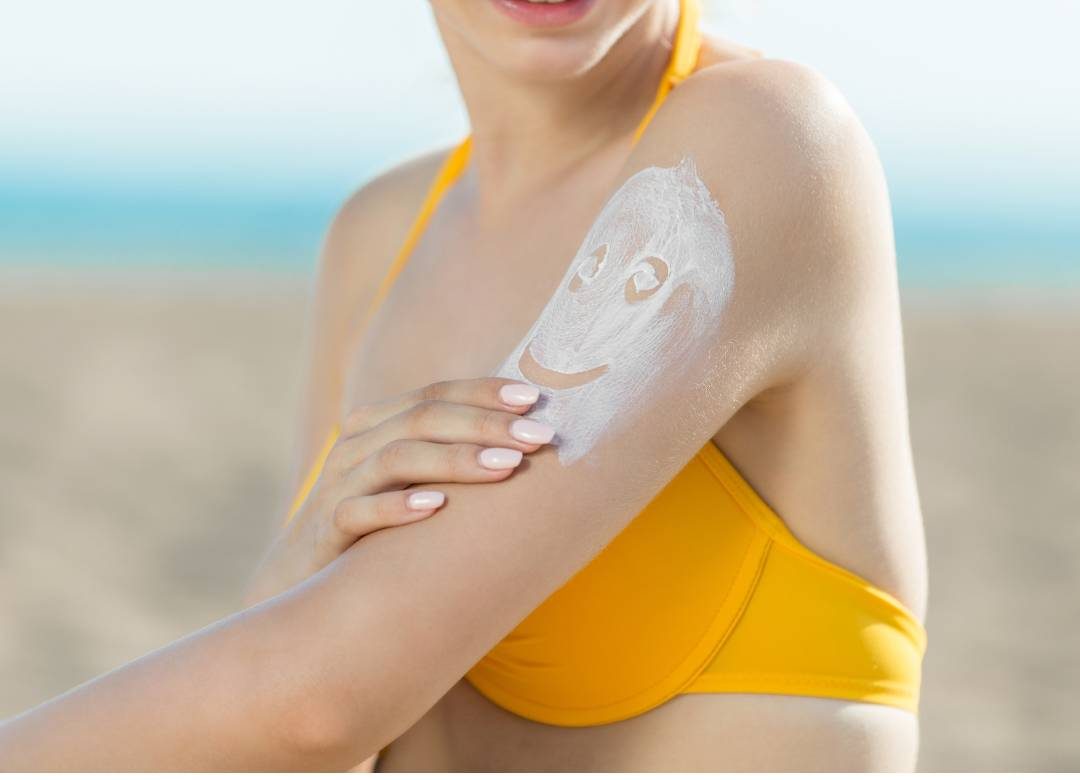
Studies in scientific circles are also discussing whether it could also be harmful to us humans. They are suspected of being potentially carcinogenic and endocrine disruptors, but long-term studies on their effectiveness are lacking.

The "Coral Reef Friendly" label means that companies have committed to omitting those ingredients in their production that have a negative effect on the underwater world.


Organic sun creams use mineral UV filters

These work like mini mirrors and reflect the sunlight on the skin. Mineral UV filters with titanium oxide and zinc oxide form a protective layer on the skin and do not penetrate the skin barrier. The disadvantage is "whitening", i.e. a white layer on the skin. To counteract this, the mineral particles have become smaller and smaller in recent years, sometimes in nano-size. It has not yet been fully clarified whether these nanoparticles can penetrate the skin barrier.

 

You should therefore opt for environmentally friendly, nanoparticle-free sun protection products, which unfortunately are not available everywhere.

The Silent Majority: Why Solidarity Is Stronger Than We Think

The Silent Majority: Why Solidarity Is Stronger Than We Think

Collaboration

Climate change, species loss, or water scarcity—many of the major challenges of our time have one thing in common: they can only be solved through cooperation. This makes the findings of a new international study all the more surprising, as it shows that people are significantly more cooperative than they themselves realize.

Researchers surveyed and tested more than 100,000 people in 125 countries. The result: The majority of people are willing to put their own interests aside for the common good. At the same time, most people significantly underestimate their fellow human beings’ willingness to cooperate.


Cooperation is the rule, not the exception

For the study published in the scientific journal *Science*, researchers not only surveyed participants' opinions but also examined their actual decisions. Participants had the option of forgoing a portion of their own money to create a greater collective benefit.

About 69 percent chose to cooperate. However, the respondents assumed that only about 47 percent of their fellow citizens would also cooperate.

This finding reveals a remarkable paradox: Many people are willing to contribute to the common good, but believe that they are the exception rather than the rule.

This misperception can be particularly problematic when it comes to climate protection. People who believe that others are not on board are often less willing to take action themselves. As a result, the actual support for joint solutions often goes unnoticed.


What This Means for Climate Protection

The results confirm earlier international studies. A global study conducted in 2024 had already shown that a clear majority of people would be willing to make financial contributions to climate protection. At the same time, respondents significantly underestimated the level of support among their fellow citizens.

This leads to an important insight for policymakers, businesses, and social initiatives: Public support for climate protection measures could be greater than is often assumed.

Instead of constantly emphasizing what people don't want to do, it might be more effective to highlight how many are already willing to take on responsibility. Positive examples and community projects can thus generate additional momentum.


The Power of Social Confidence

Many debates are shaped by conflicts and differences. The new study draws attention to an often-overlooked reality: cooperation appears to be one of the fundamental characteristics of human societies.

This insight is particularly important in light of the climate and biodiversity crises. Technological innovations alone will not be enough. The key factor will be whether people are willing to act together.

The data suggests that this willingness already exists—perhaps to a much greater extent than we realize.


Facts and Figures

  • More than 100,000 participants
  • 125 countries surveyed
  • Published in 2026 in the scientific journal *Science*
  • 69 percent of the participants cooperated in the experiment
  • On average, respondents expected others to be only 47 percent willing to cooperate
  • One of the largest globally representative studies to date on human cooperation
  • Previous climate studies show similar results: Support for climate action is often significantly underestimated


Sources: Science (2026), University of Bonn, Global Commons Survey (2024), Nature Climate Change (2024)

Urban greening is no longer just for decoration—it’s becoming the air conditioning of the future

Urban greening is no longer just for decoration—it’s becoming the air conditioning of the future

Copy of pro.earth Editorial Template NEW(1354)

As Europe suffers through its second heat wave of the year, it’s becoming clear that cities, in particular, are heating up significantly. Asphalt, concrete, and impervious surfaces store heat and release it again at night. This creates so-called heat islands, where temperatures can be several degrees higher than in the surrounding areas. As a result, more and more cities are turning to urban greening. Trees, parks, green facades, and green roofs are intended not only to beautify the cityscape and enhance well-being, but also to become a key part of the infrastructure in the fight against the consequences of climate change.

Facts and Figures

  • Europe is the continent that is warming the fastest.
  • In densely built-up urban areas, temperatures during heat waves can be up to 10 °C higher than in the surrounding countryside.
  • Green spaces can lower the local ambient temperature by several degrees.
  • A mature deciduous tree can filter several kilograms of particulate matter per year and store several metric tons of CO₂ over its lifetime.
  • Green spaces with trees and shrubs thus become carbon sinks
  • By 2050, about 80 percent of Europeans are expected to live in cities.

BOKU research project investigates heatwaves and countermeasures in urban areas


Why Do Cities Heat Up So Much More?

There are many reasons for this:

  • For example, surfaces sealed with concrete and asphalt absorb solar radiation and transfer the heat to deeper layers.
  • In addition, because there is less vegetation in cities, less water evaporates to cool the air.
  • Buildings also contribute to the urban heat island effect by increasing the city's surface area, which stores heat, and by reducing air circulation.
  • The many rooftops also contribute to cities heating up more.
  • Similarly, exhaust emissions from transportation and industry contribute to this effect.
  • Heating and cooling make the heat even worse.
  • Parked cars also generate more heat.


Trees cool more effectively than many technical solutions

Plants act like natural air conditioners. Through shade and evaporation, they can significantly lower the ambient temperature. Studies show that green spaces can be several degrees cooler on hot days than heavily paved areas.

Urban trees, in particular, play an important role in this regard. On a hot summer day, a mature tree can evaporate several hundred liters of water, thereby actively helping to cool the environment. At the same time, trees filter fine particulate matter from the air, sequester CO₂, and improve the quality of life in densely built-up areas.

Green roofs and facades are also becoming increasingly important. They reduce the amount of heat absorbed by buildings, store rainwater, and create additional habitat for insects and birds.


From a Concrete City to a Climate-Resilient City

Many European cities are already working on long-term adaptation strategies. In addition to creating new green spaces, they are removing pavement from streets, expanding parks, and implementing so-called “sponge city” concepts. The goal is to store rainwater locally while also taking advantage of the cooling effect of plants.

Especially in densely populated urban areas, the combination of green spaces, water management, and sustainable urban planning will be a decisive factor in quality of life in the coming decades.

Experts believe that investments in urban green spaces will become just as important in the future as investments in transportation, energy, or water supply. After all, adaptation to climate change begins where people live: in cities.

Europe's New Reality: How Sponge Cities Help Combat Water Scarcity


German Environmental Aid (DUH) Reveals Loss of One Million Trees in Cities

According to the DUH’s latest Heat Check, the opposite trend is taking place in Germany—the residents of the cities surveyed are finding themselves with less and less protection from the consequences of the climate crisis. According to a press release, more than 900,000 trees have disappeared from the 195 cities surveyed—all of which have populations of more than 50,000—between 2018 and 2025.

Only seven cities meet the scientifically recommended benchmark of at least 30 percent tree canopy cover—including Hamburg, Berlin, Oldenburg, Potsdam, and Solingen. Since new areas were paved in all the cities studied, the DUH was unable to award a single “green card” for the paving trend. In terms of the heat vulnerability index—which is composed of the indicators of land sealing, green space volume, surface temperature, and population density—the situation has actually worsened compared to the previous year: Although a total of five more cities were examined than in 2025, the number of green cards has dropped from 28 to 21.

In the overall rankings, the cities of Offenburg, Lahr, and Mannheim fare particularly poorly. Kiel and Wuppertal stand out positively.

Under the slogan “Trees Save Lives,” the DUH is launching a petition to preserve shade-providing trees at www.mitmachen.duh.de/stadtgruen. The DUH is also calling on citizens across Germany to report trees at risk of being cut down and to follow the example of Berlin’s “Baumentscheid” (Tree Decree) by taking action to bring more greenery to their cities.


Our pro.earth.conclusion:

Urban greening must be viewed as part of critical infrastructure. What appears today as a park, a row of trees, or a green facade could be crucial tomorrow in determining how well cities cope with the consequences of climate change. A key task is to drastically reduce the current rate of soil sealing, to reopen sealed surfaces to allow rainwater to infiltrate, and to preserve and replant natural sources of shade and cooling. For the benefit of us all.

Greenpeace Study: Climate Crisis and Cuts to Development Aid Significantly Increase the Number of Displaced People

Greenpeace Study: Climate Crisis and Cuts to Development Aid Significantly Increase the Number of Displaced People

Copy of pro.earth Editorial Template NEW(1353)

The number of people displaced by natural disasters and extreme weather events rose significantly last year to 13.6 million, up from 9.9 million in 2024. This is according to a new report by the University of Hamburg commissioned by Greenpeace.  It further examines how wars, significant cuts to development aid, and high prices for fossil fuels and synthetic fertilizers are exacerbating the displacement crisis in the Global South. The global budget for development and humanitarian aid was slashed by nearly a quarter in 2025 to $175 billion, compared to 2024. All of this contributed to 82.2 million people being displaced worldwide last year. The causes of displacement have shifted recently. More and more people are fleeing natural disasters.

“The consequences of the climate crisis—which is largely caused by industrialized nations—are displacing more and more people in the regions that have contributed the least to this crisis. While families in the Global South are losing their homes to climate disasters, wealthy nations are cutting aid. This humanitarian crisis must end. Industrialized nations must accelerate their efforts to reduce emissions and help the countries hardest hit adapt to the consequences of the climate crisis.”
– Fawad Durrani, migration expert at Greenpeace


The year 2025 saw numerous wildfires, extreme drought (including in the Amazon Basin), catastrophic floods in several African countries, heat waves in Portugal and Spain, record-breaking temperatures in Japan, South Korea, and China, heavy monsoon rains, and several destructive typhoons and cyclones. According to the Greenpeace report, roughly one-fifth of the world’s population is already exposed to high climate-related risks, based on World Bank estimates. Those who have already been affected by extreme weather events in recent years are the most vulnerable.


Climate Crisis and Cuts to Development Aid Exacerbate the Emergency

The report examines in depth the effects of the climate crisis and declining development aid on displacement through two case studies. In Afghanistan, for example, melting glaciers in the Himalayas are threatening the supply of drinking water and agricultural irrigation. Extreme droughts are followed by catastrophic flash floods. As a result, people are forced to leave their homes. Kabul is on track to become the first major city in the world to lose its drinking water supply.

In hardly any other country—such as the Democratic Republic of the Congo (DRC), the second case study—have U.S. development funds been cut more drastically. While $1.4 billion flowed into the DRC in fiscal year 2024, that figure had dropped to just $21 million by fiscal year 2026. In a widely acclaimed study, an international research team examined the effect of this sudden cut on the emergence of conflicts. The results show that the relative probability of conflicts increased significantly.


Link

Click here for the Greenpeace report


When Europe Overheats: How Heat Waves Push Our Infrastructure to Its Limits

When Europe Overheats: How Heat Waves Push Our Infrastructure to Its Limits

Heat

Even before the start of the 2026 astronomical summer, Europe is already experiencing its second exceptional heat wave of the year. At the end of May, temperature records were broken in several countries, and by mid-June, temperatures had once again climbed to over 40 degrees Celsius. Meteorologists are calling it an unusually early and intense heat season.

But the consequences are no longer limited to health and agriculture. Roads, rail lines, power grids, data centers, and cities are coming under increasing pressure. The question is no longer whether Europe must adapt to more frequent heat waves—but how quickly it can do so.


The heat is putting Europe's infrastructure to the test

Europe is warming faster than any other continent. The exceptional heat in May 2026 demonstrated just how much climate patterns have already changed. France recorded its warmest spring since weather records began. The average temperature from March through May was 13.8 degrees Celsius, 1.7 degrees above the long-term average.

By the end of May, temperatures in parts of Europe were already 10 to 15 degrees above the usual levels for this time of year. In the United Kingdom, a temperature of 34.8 degrees Celsius was recorded—the highest ever measured in May.

Such extreme temperatures pose problems for infrastructure. Asphalt can deform, and rails expand, increasing the risk of track buckling. At the same time, electricity demand rises due to cooling and air conditioning, while high temperatures impair the performance of power grids and technical systems.


Cities Are Becoming Heat Hotspots

Urban areas are particularly affected. Concrete, glass, and asphalt store heat and release it only slowly at night. This creates what are known as urban heat islands.

During a heat wave, densely built-up urban areas can remain up to 10 degrees warmer at night than the surrounding countryside. The consequences range from higher energy consumption and poorer sleep to health risks for older adults and children.

Many cities are now responding with adaptation measures:

  • Greening of Roofs and Facades
  • additional trees and green spaces
  • Unsealing of land
  • Water bodies used for cooling
  • shaded recreational areas in public spaces

These measures not only improve the urban climate but also reduce the energy needed for cooling.

Climate adaptation is becoming an economic necessity

The costs of extreme weather events have been rising for years. Damage to roads, railways, power grids, and buildings costs billions across Europe every year.

That is why more and more countries are investing in heat-resistant infrastructure. New road surfaces, more heat-resistant rails, digital sensor systems, and so-called "sponge city" concepts are intended to help mitigate the effects of extreme heat.

Experts largely agree: Even if global emissions were to decline rapidly, heat waves will occur more frequently in the coming decades. Climate adaptation will therefore become just as important a task as climate protection itself.


Facts and Figures

  • In 2026, France experienced its warmest spring since records began. The average temperature was 13.8 °C, about 1.7 °C above the long-term average.
  • In May 2026, temperatures in parts of Europe were at times 10 to 15 °C above average.
  • At the end of May, the United Kingdom recorded 34.8 °C, the highest temperature ever recorded in May.
  • In Portugal, a new national heat record for May was set at the end of May, with a temperature of 40.3 °C.
  • Copernicus described the heat wave at the end of May as “exceptionally early and intense,” with regional temperature deviations of more than 10 °C above average.
  • In mid-June 2026, temperatures in France were once again expected to range between 34 and 40 °C—and even exceed 40 °C in some areas—even before the official start of summer.
  • Highs of 30 to 31 °C were already expected for Vienna in June 2026.
  • Since 1900, Austria has warmed by about 3.1 °C, which is significantly more than the global average.


The current heat waves show that Europe faces more than just the challenge of climate protection. Increasingly, the focus is shifting to the question of how cities, transportation systems, and energy supplies can be adapted to a climate that is already significantly hotter today than it was just a few decades ago.

EU Parliament Approves Deregulation of New Genetic Engineering

EU Parliament Approves Deregulation of New Genetic Engineering

Copy of pro.earth Editorial Template NEW(1352)

Green light for the deregulation of new genetic engineering methods: After lengthy negotiations, the European Parliament in Strasbourg has adopted the new EU law on New Genomic Technologies (NGT). While a labeling requirement is still in place for seeds, it has been completely eliminated for derived products such as food or animal feed. As a result, genetically modified foods will enter our supermarkets without appropriate labeling, making it impossible for consumers to recognize or distinguish them as such. Furthermore, newly created genetically modified plants can be patented, which could lead to a flood of patents filed by agribusiness corporations in the future. The decision has sparked widespread criticism.


According to the new regulation, certain new breeding methods, including the CRISPR/Cas gene-editing tool, will no longer be automatically subject to strict GMO regulations. Under the new rules, a large proportion of NGT plants (NGT1 or “Category 1 plants”) will be exempt from strict authorization, risk assessment, and labeling requirements. They are to be treated largely like conventionally bred plants, and key elements of the previous genetic engineering legislation will not apply to them.

Definition:

– NGT stands for New Genomic Technology. In the future, the EU will classify genetically modified plants into two categories: NGT1 and NGT2.

– NGT 1: The first category includes plants in which fewer than 20 genetic modifications were made using the CRISPR/Cas9 gene-editing tool.

– NGT2: Strict GMO regulations continue to apply to NGT2 plants—that is, plants that have undergone significant modifications (such as the incorporation of genetic material from bacteria or other plants).

NGT crops could already be grown in the EU—they simply had to comply with the same rules as traditional genetic engineering and were therefore subject to risk assessment and labeling. Today’s decision has eliminated those requirements for NGT crops.


The goal behind the decision sounds reasonable: to make more resilient varieties—resistant to extreme weather, water shortages, and pests—available more quickly and to reduce the use of fertilizers and pesticides. However, many environmental organizations see far greater problems than benefits for citizens. Member of the European Parliament Manuela Ripa (ÖDP) emphasizes that the challenges of climate change and sustainable agriculture cannot be solved by weakening existing safety standards: “Innovation is not a free pass for deregulation. Especially when it comes to genetic modifications, the precautionary principle, independent risk assessments, and complete transparency must apply.”


No freedom of choice for consumers

Ripa goes on to criticize this as risky and a serious infringement on citizens’ freedom of choice: “Without proper labeling, consumers have virtually no way of knowing what’s on their plates.”

Florain Faber, managing director of ARGE-Gechntechnik-frei, shares this view: “The European Parliament missed an opportunity today to permanently ensure transparency and freedom of choice for consumers on the sensitive issue of genetic engineering,” explains Faber.

“In the run-up to the decision, large segments of the food industry, as well as consumer and environmental protection groups, agreed that comprehensive labeling and traceability throughout the food chain, as well as effective regulations against the patenting of plants and products derived from new genetic engineering, are urgently needed. This is the only way to preserve the independence and quality standards of European food production. The urgent warnings against unregulated and uncontrolled new genetic engineering were ignored.”

While foods produced using new genetic engineering techniques will no longer be required by law to be labeled in the future, these methods will continue to be excluded from both organic standards and “non-GMO” production; in other words , the organic sector will remain GMO-free.


Monopolization and a Flood of Patents

The new regulation is putting pressure on small and medium-sized seed companies and threatening the survival of small seed breeders. The Austrian Chamber of Labor criticizes that this poses the risk of massive market concentration in the hands of a few international corporations, as is already the case in the United States.

In 2024, the European Parliament called for an NGT regulation that would ensure the labeling of NGT products and halt the patenting of seeds. Today, members of the European Parliament in Strasbourg approved a regulation that does not meet any of their own demands. Amendments that would have restricted the patenting of seeds failed to secure a majority in the vote.

Today is a dark day for biodiversity” comments Dagmar Urban, an expert on seed policy at ARCHE NOAH. The European Parliament has missed a historic opportunity to stop the monopolization of our seeds. New genetic engineering means, above all, patented seeds. Seed patents empower large corporations and stifle innovation, as experience from the U.S. clearly shows.

According to a press release, Greenpeace also feared “a veritable avalanche of patented seeds,” which would threaten to bring about “American-style conditions in the EU, with farmers becoming even more dependent on international seed corporations.”


2,000 Applications for Genetic Engineering Patents

“The much-needed halt to patents has been canceled. With the advent of new genetic engineering, a flood of patented seeds is coming our way,” comments Urban of ARCHE NOAH. With its decision, the European Parliament is taking a stand against Europe’s farmers and also against its own voters. Farmers face massive legal uncertainty due to patents on seeds. At the same time, 80 percent of voters clearly reject patents on seeds, as shown by a representative study commissioned by the organization “No Patents on Seeds!”

To date, there have been approximately 2,000 patent applications worldwide for NGT plants. In addition, there are patents on conventionally bred plants, which are actually prohibited in Europe but are nevertheless repeatedly granted by the European Patent Office. A recent example is a patent held by the German KWS Group on feed corn with improved digestibility, which covers not only the plants but also the silage.

Patents hinder innovation in plant breeding because they restrict access to biological material needed to develop new varieties.“We won’t give up. This is about control over our food,said Dagmar Urban.

“As legal transparency declines, the importance of credible voluntary labeling systems increases,” said Florian Faber. “‘GMO-free’ and ‘organic’ will be the most reliable guides in the future for anyone who wants to consciously avoid genetically modified organisms in their diet.”

Jean Ziegler Has Died – A Provo and Outspoken Critic of Hunger and Injustice

Jean Ziegler Has Died – A Provo and Outspoken Critic of Hunger and Injustice

Field (36)

Jean Ziegler has passed away in Geneva at the age of 92. With the passing of this Swiss sociologist, politician, author, and former UN Special Rapporteur on the Right to Food, the world has lost one of the most influential voices in the fight against hunger, poverty, and global inequality.

For decades, Ziegler asked uncomfortable questions. Why do people go hungry in a world of abundance? Why do some regions benefit from global prosperity while others suffer from poverty, hunger, and exploitation? His answers were often controversial, and his criticism of politics, the financial system, and multinational corporations was sharp—and that is precisely why he became known far beyond Switzerland.


The Fight Against Hunger as a Life's Work

Ziegler gained international recognition primarily as the UN Special Rapporteur on the Right to Food. Between 2000 and 2008, he traveled to numerous countries, documented food crises, and drew attention to the structural causes of poverty. For him, hunger was not a natural phenomenon, but the result of political and economic decisions.

Particularly powerful was the statement that made him famous worldwide: A child who dies of hunger is not a victim of a lack of food, but a victim of a system that fails to ensure his or her sustenance. This stance shaped his entire body of work.


Criticism of the Global Economic System

Ziegler was one of Europe's best-known critics of globalization. He criticized food speculation, tax evasion, corruption, and the power of large financial and corporate conglomerates. At the same time, he was committed to international solidarity and a more equitable distribution of resources.

He was a figure who regularly divided opinion. To some, he was an unwavering champion of social justice; to others, an ideological critic of capitalism. What is undisputed, however, is that he shaped the debate on global responsibility, hunger, and development policy for decades.


Why Jean Ziegler's Message Is More Relevant Today Than Ever

The issues that concerned Jean Ziegler remain highly relevant in 2026. Climate change is threatening crops around the world, water is becoming scarcer in many regions, and geopolitical crises are exacerbating uncertainty regarding food supplies.

At the same time, the world continues to produce enough food to feed everyone. The crucial question therefore remains the same one that Ziegler has been asking for decades: How can we ensure a fair distribution of available resources?

His legacy therefore remains particularly relevant for sustainability initiatives such as pro.earth. After all, environmental challenges and social justice cannot be separated from one another. Anyone who talks about climate protection must also talk about food security, access to water, and global responsibility.


Facts and Figures

  • Jean Ziegler was born on April 19, 1934, in Thun, Switzerland.
  • He served as a member of the Swiss National Council for 27 years.
  • From 2000 to 2008, he served as the UN Special Rapporteur on the Right to Food.
  • He has published more than 30 books on the topics of hunger, globalization, and social justice.
  • Jean Ziegler died on June 10, 2026, in Geneva at the age of 92.


With the passing of Jean Ziegler, the world has lost one of its most vocal critics of global inequality. His central message endures: Hunger, poverty, and environmental destruction are not inevitable fates—they are challenges for which people bear responsibility.

Photo: Boris Dupont / Wikimedia Commons (CC BY-SA 4.0)